Role
Product designer
Platforms
Web

The Share dialog is an important part of the pdfFiller experience across the product. From there users can share a document via email, copy a link, adjust permissions or share it with their workspace. The same pattern appears in several places in the product, including the document editor.
Using product analytics, I analysed how people behaved after opening this dialog. This analysis led to a hypothesis that adding a secondary entry point to the e-sign flow inside the sharing experience could be a valuable option and significantly increase the number of documents sent for signature. This case study covers what we learned from that experiment.
Product analytics showed a noticeable drop-off in the Share dialog: around 35% of users who opened it closed it without sharing the document. At the same time, we could see in the analytics that some users were effectively using Share just to get a document signed by someone else — they shared it with a single recipient and expected that person to sign it.
We already had an e-sign flow in the product, but it lived behind a different entry point and was not directly connected to sharing. Taken together, these patterns led to a hypothesis: part of the users who opened Share and did nothing were actually looking for a way to request a signature, not just to share access.
Our hypothesis was that adding a clear secondary entry point for e-sign directly into the Share dialog would:
capture users who came there intending to get the document signed;
increase documents sent for signature;
keep the main sharing completion rate unchanged.
I didn’t want to overload the main sharing controls or confuse the primary flow, so I reviewed competitor products and best practises for secondary actions in dialogs. Based on that, I designed a separate block at the bottom of the dialog:
Visual separation. The secondary action sits below the main sharing controls and is visually separated. This makes it clear that it’s a different type of action.
Clear value in the action. The block is labelled “Request e-signatures” with a short description such as “Invite others to securely sign this document online” to set the right expectation.
Same product, new path. Clicking the block doesn’t take users to a different page. It launches the existing e-sign flow for the current document right there.
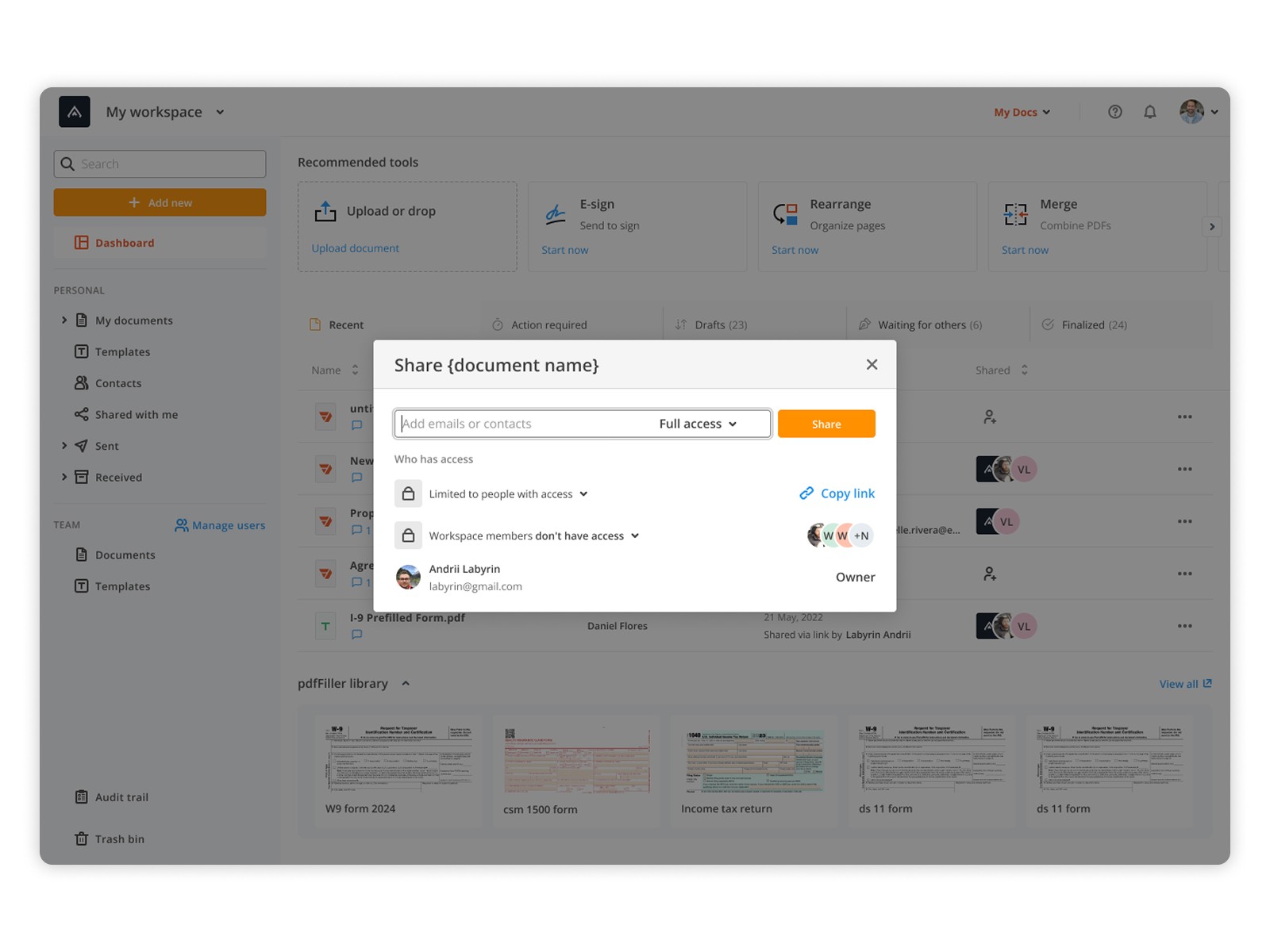
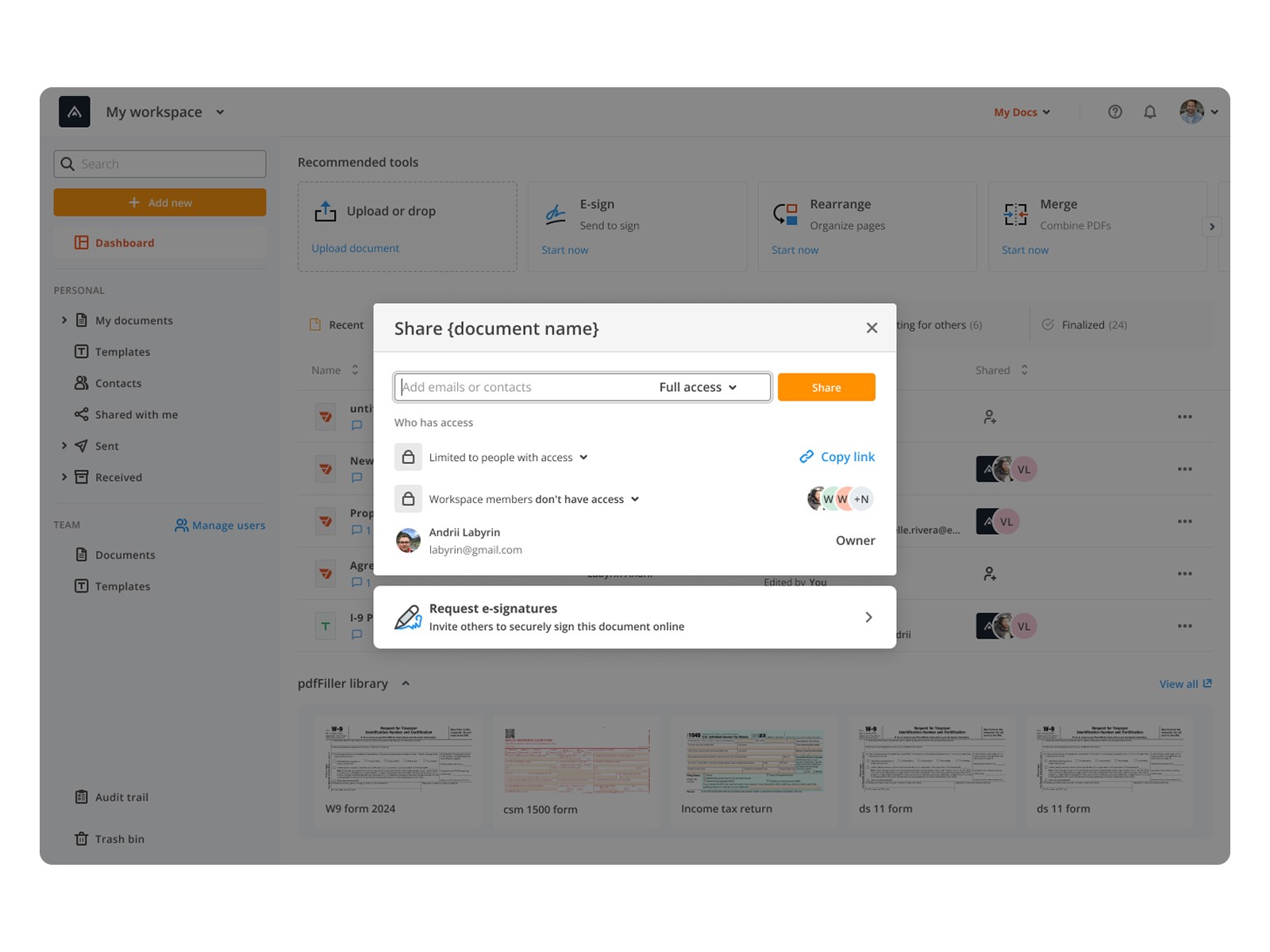
We ran an A/B test where the trigger for the experiment was opening the Share dialog.
Variant A: the original Share dialog.
Variant B: the same dialog plus the new “Request e-signatures” section at the bottom.
Based on product analytics and event tracking for this test:
documents sent for signature increased by around 200%;
the completion rate of regular sharing (sharing via email or link) remained stable, which meant we didn’t drop the main flow.
This uplift was especially important for the business, because users who send documents for signature have one of the highest retention and LTV in pdfFiller. Increasing e-sign usage didn’t just improve the feature metric — it also increased the number of our most engaged and valuable accounts.
Secondary entry points can have a big impact when they are placed in flows where people are already thinking about the next step — in this case, involving someone else in the document.
Analytics is not only about “did people complete the flow or not”; it also helps answer the question “what might they be looking for here?”. In this case, treating a 35% drop-off as a sign that users were searching for another action led us to a successful hypothesis.
It’s possible to add a new, powerful action into an existing flow without harming it.